
Walking my dog yesterday morning in a small, wooded area behind my home, I couldn’t figure out what that loud, humming, whirring noise was. Maybe heavy trucks on the interstate not far from here … but it didn’t stop.
I remembered how a few days ago, a large bug flew into my hair and another grazed my face.
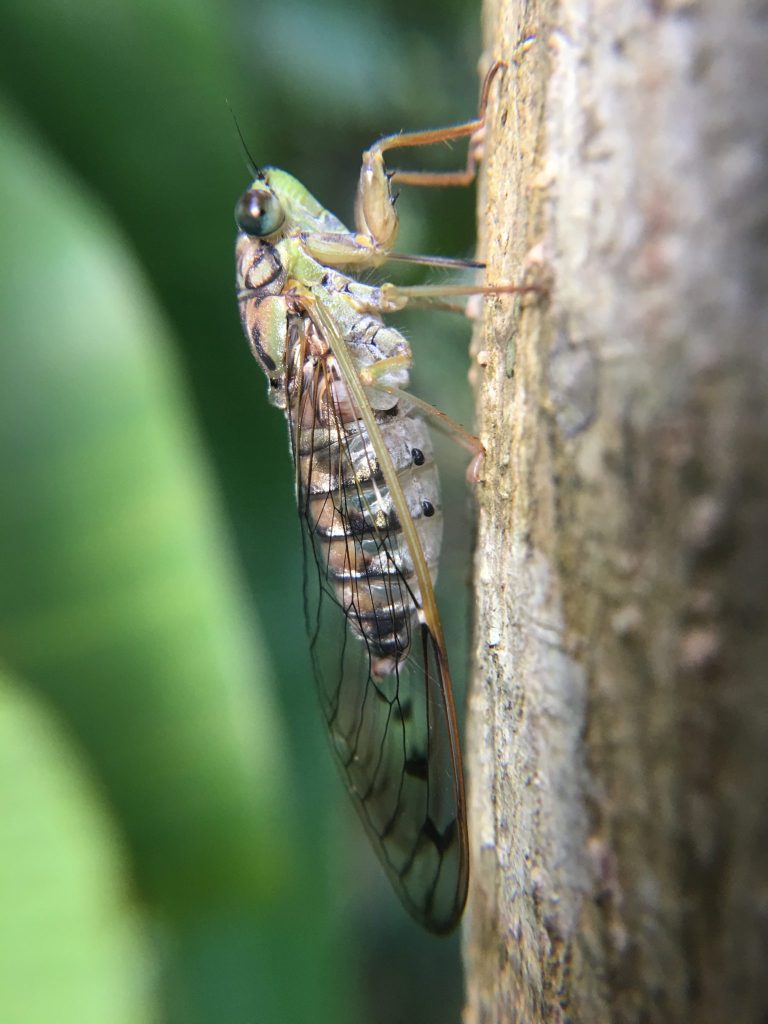
Yes, the cicada brood has emerged. I’m used to annual cicadas, the dog-day cicadas, that aren’t as loud and blend in more smoothly with other nature sounds. This 13-year brood, called Brood XIX, is not subtle.
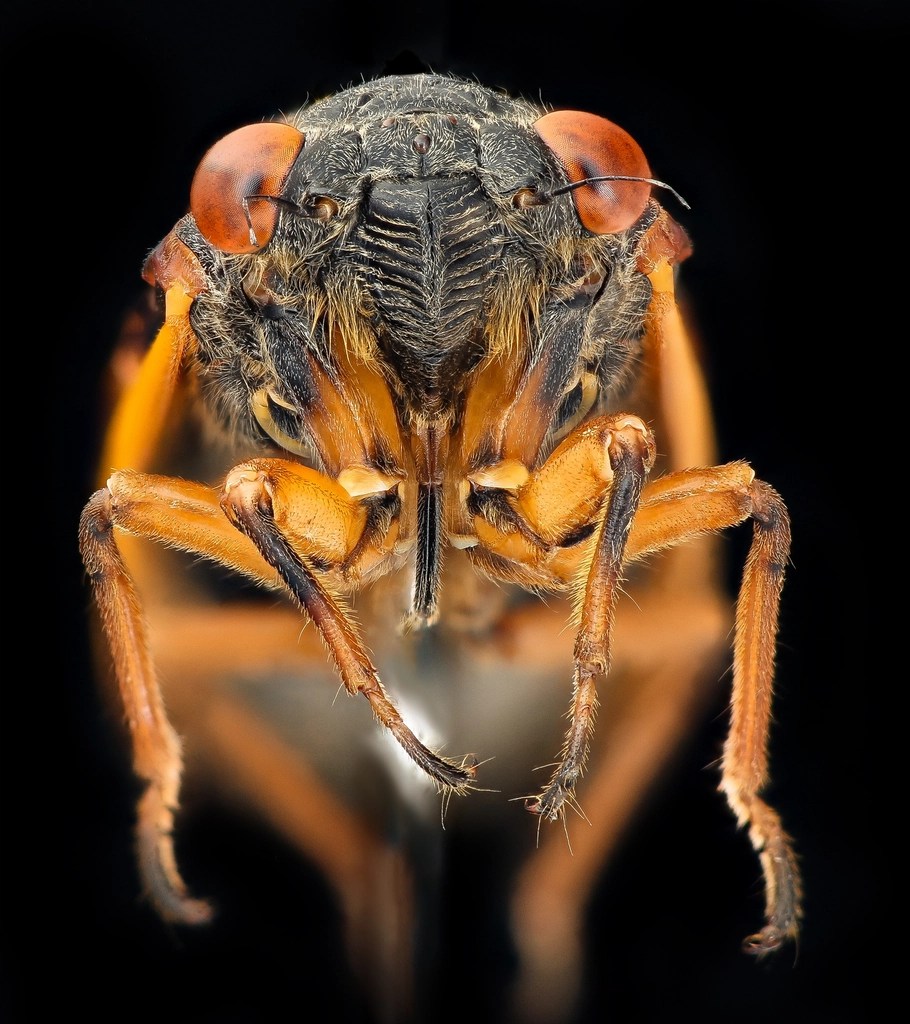
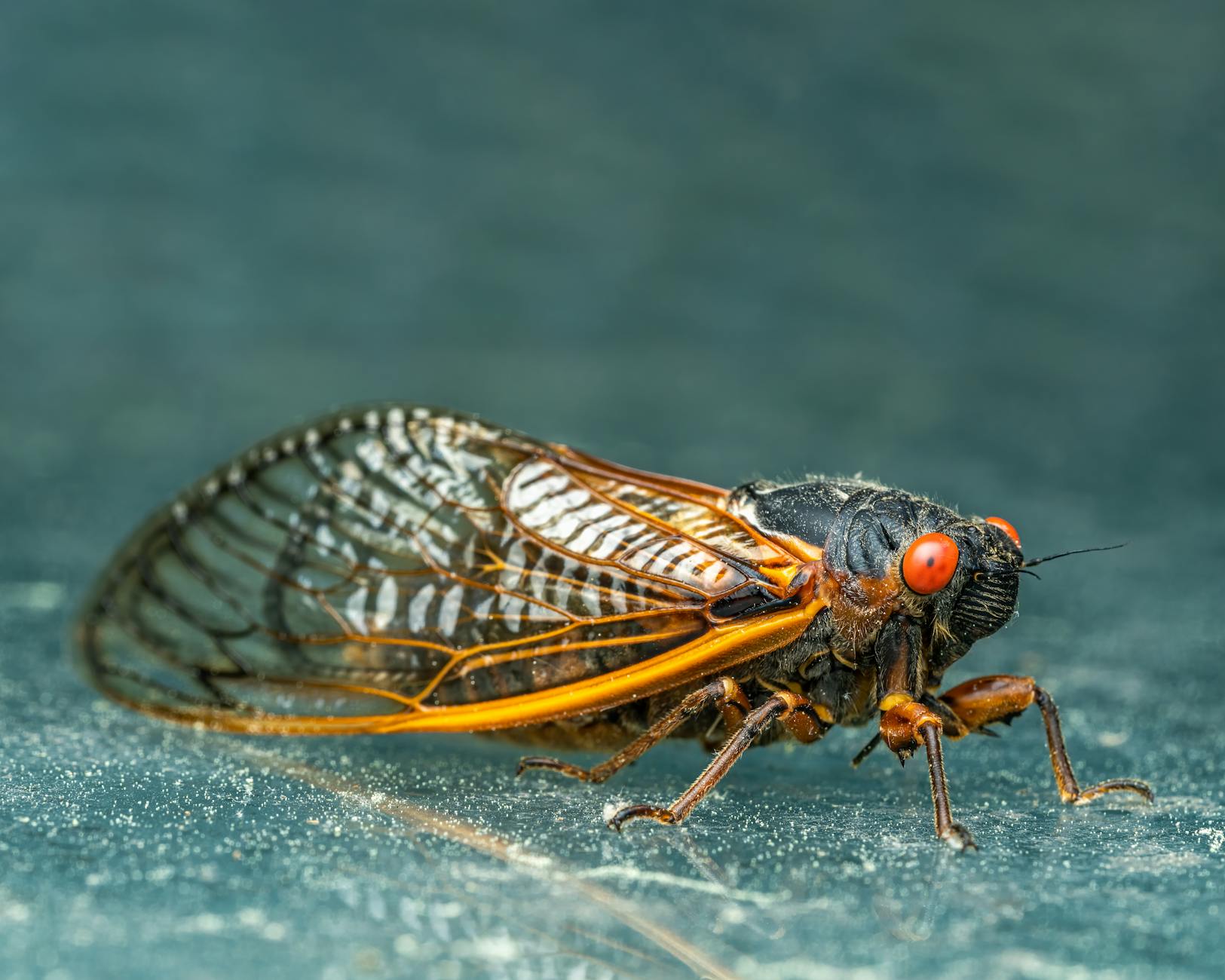
These periodical cicadas are smaller and have black bodies, red eyes, and orange wing veins. The photo below is a periodical cicada, though I don’t know which brood.
What Do Local People in North Carolina Think that Cicada Sound Is?
Using the scientific approach, I skimmed through the local Ring neighborhood chat to find some anonymous questions and concerns:
“I have been hearing a noise that I can describe as a giant vacuum cleaner out there … It starts like 8:30 in the morning and stops around 5:30. That’s why I thought it was some kind of construction machinery. It is constant.”
“I heard it at (location redacted) and thought it was a car/construction, but it’s also the same volume level 10 miles away. Does anyone know what it is? The best I can describe it is as fast-paced knocking that kinda sounds similar to the funny noise some electric cars make when they reverse. It’s driving me nuts!”
Followed by tens of responses:
“Cicadas”
“Cicadas”
“Cicadas”
“That’s what I thought!!! You can hear them, but where are they?”
Good Question.
Where are the Periodical Cicadas?
Unless they fly into my big hair or shiny face, I haven’t found any alive in adult form.
But the nymphs are in the trees.
While cicadas have good vision with their five eyes, they have a reputation for being clumsy fliers. So, remember not to do any mouth breathing which can be a challenge during allergy season.
What Exactly Do Periodical Cicadas Sound Like in North Carolina in May 2024?
While walking on a local trail with my dog, I recorded an audio sample. Ignore the panting dog and person and enjoy the sound we only get to hear for a few weeks.
My attempt at forest bathing was foiled by millions of male cicadas using their tymbal organs in a frenzy to attract a mate.
For a more professional recording and sampling of the various brood’s unique sounds, see below.
How do Tymbal Organs Make Such a Racket?
Tymbal muscles. Vibrating membranes. Hollow cavities. The video below explains it better.
How Loud are the Periodical Cicadas?
Collectively, with the males synchronizing their mating calls, they reach the loudness of a lawn mower, about 96 dB.
North Carolina will get millions of cicadas and their sound travels approximately 1.5 miles.
How Did Brood XIX Cicadas Get to North Carolina?
They’ve been here all along. Well … underground and living off tree roots.
They dig up to the surface when it’s their year and when the ground temp hits 64 degrees F which happened in May in North Carolina.
After these cicadas, in nymph form, emerge, they find a vertical surface, often a tree and shed their exoskeleton to molt into an adult. Once a winged creature, the male starts the mating calls.
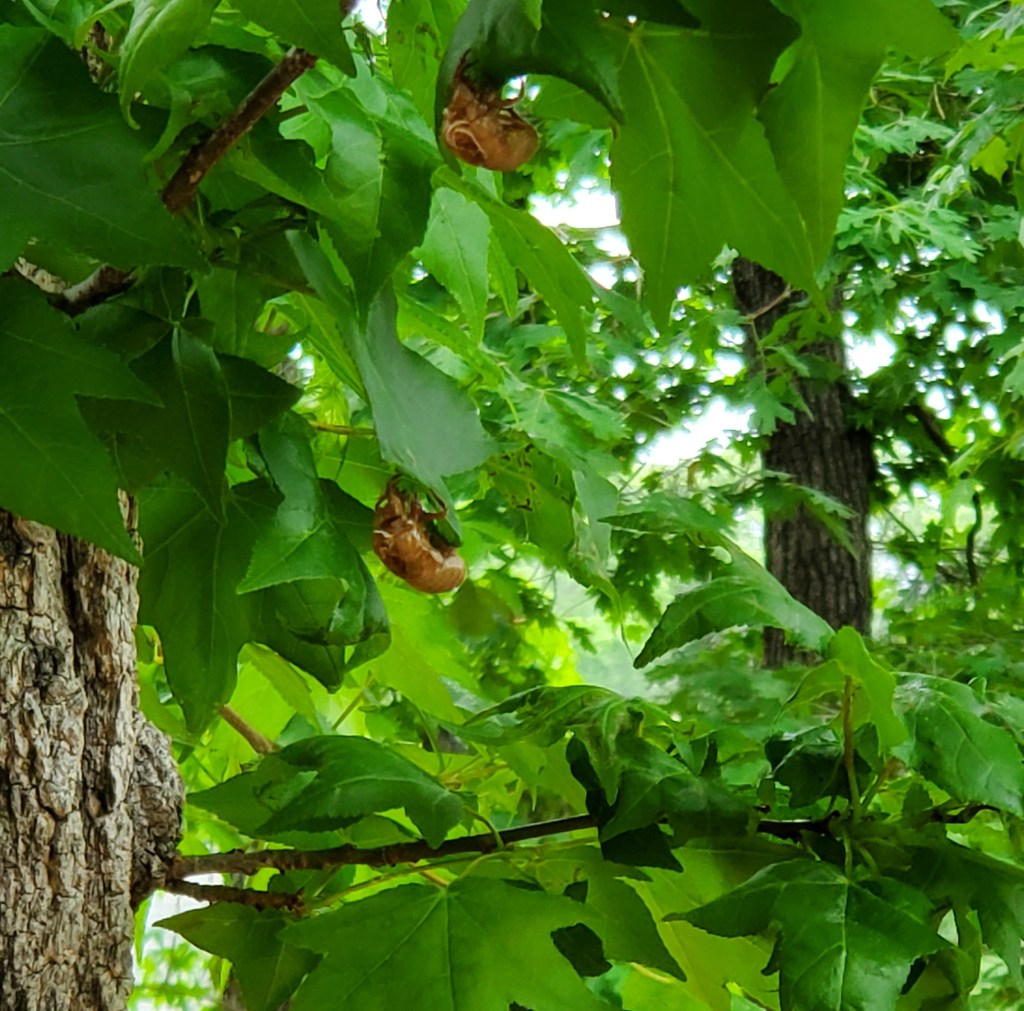
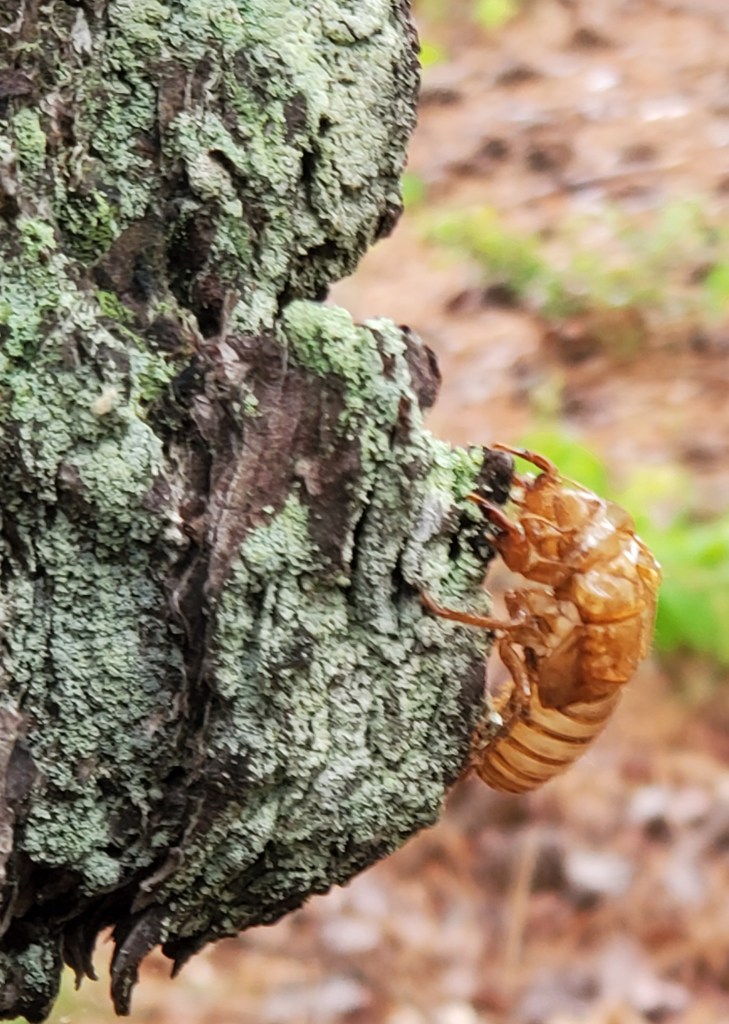
I found lots of nymphs and/or exoskeletons on trees and leaves. You decide which is which. Most of the local nymphs preferred leaves over tree trunks.
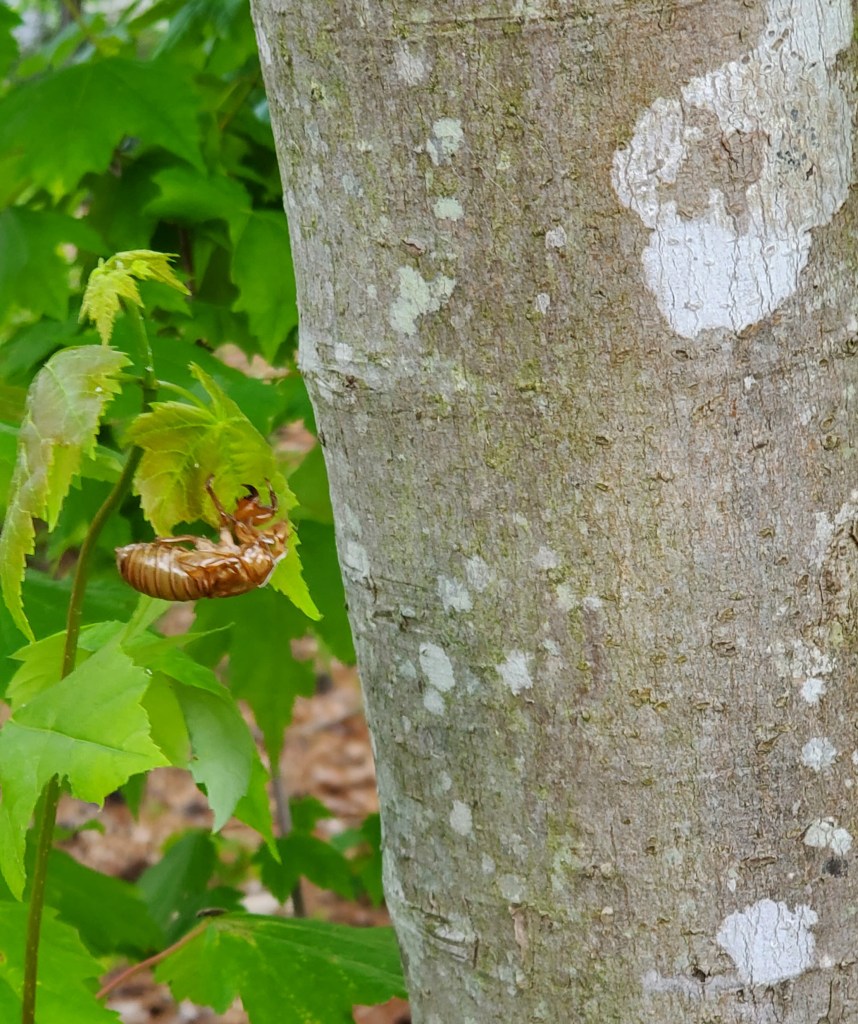
Below is a better photo from somewhere else.
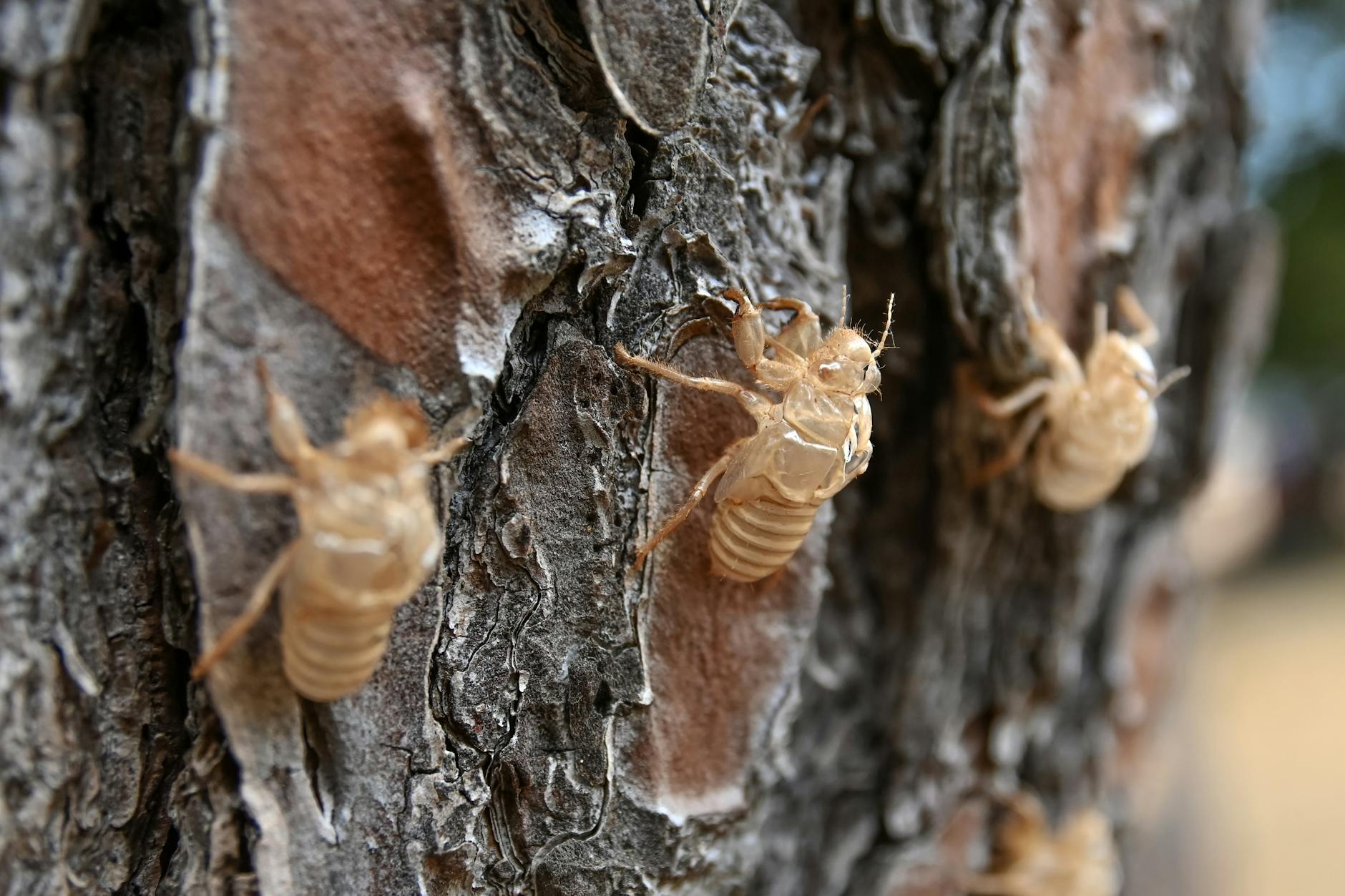
Eerily, looking at all the nymphs on leaves and trees in my area reminded me of an insect version of the 1956 movie Invasion of the Body Snatchers, and I felt like I was waiting for a duplicate insect to emerge from a pod.
How Exactly Does a Nymph Become an Adult Cicada?
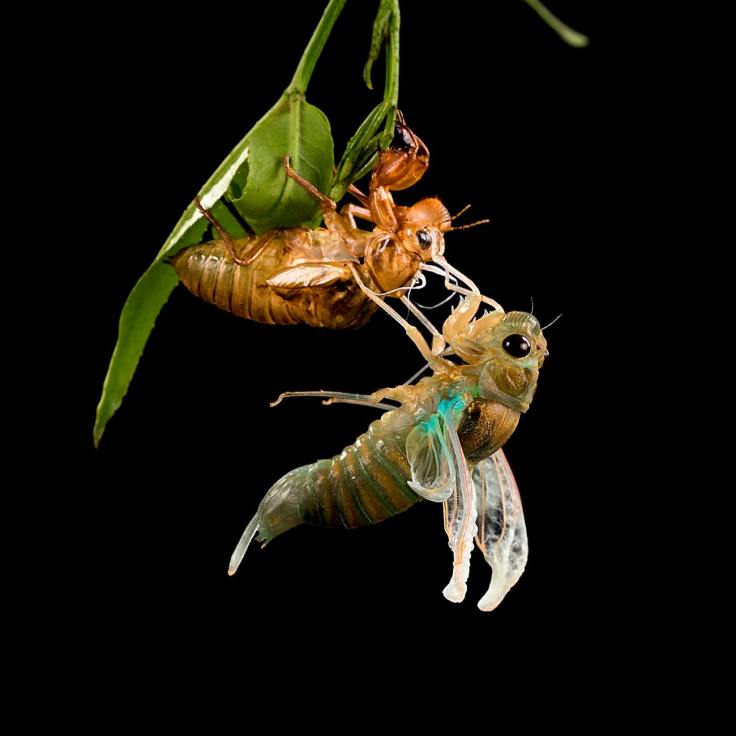
It looks something like the photo below. It extracts itself from its exoskeleton. Then, it pumps blood into its wing’s veins to get them to expand and waits about an hour for them to dry off before they can fly.
What is the Life Cycle of Periodical Cicadas?
After the cicadas transform into adults, the males make their call to find their mates. Then, the females cut into branches of trees and plants and lay eggs inside, hundreds of eggs. The adults die after a few weeks. After, the eggs hatch, the nymphs drop into the ground. Then, they burrow next to a tree root to feed on until it’s time to crawl up again.
A Smithsonian National Museum of Natural History has a video that explains the cicada life cycle.
Good-bye for Now Cicadas
Part creepy science fiction with creatures crawling up from the ground to shed an exoskeleton on a tree and part romance story with the screeching of mating calls and new life being born, only for that new life to crawl back into the earth … They are a unique diversion from the ordinary.
Since the periodical cicadas are only found in the Eastern United States, I feel fortunate to have seen them in some form and heard their song. It will be 2037 before I get a few more weeks with them. Until then, I’ll have to be more appreciative of our dog-day cicadas with their green eyes and relatively quiet natures.